MASIT Successfully Held Its 19th Annual Conference
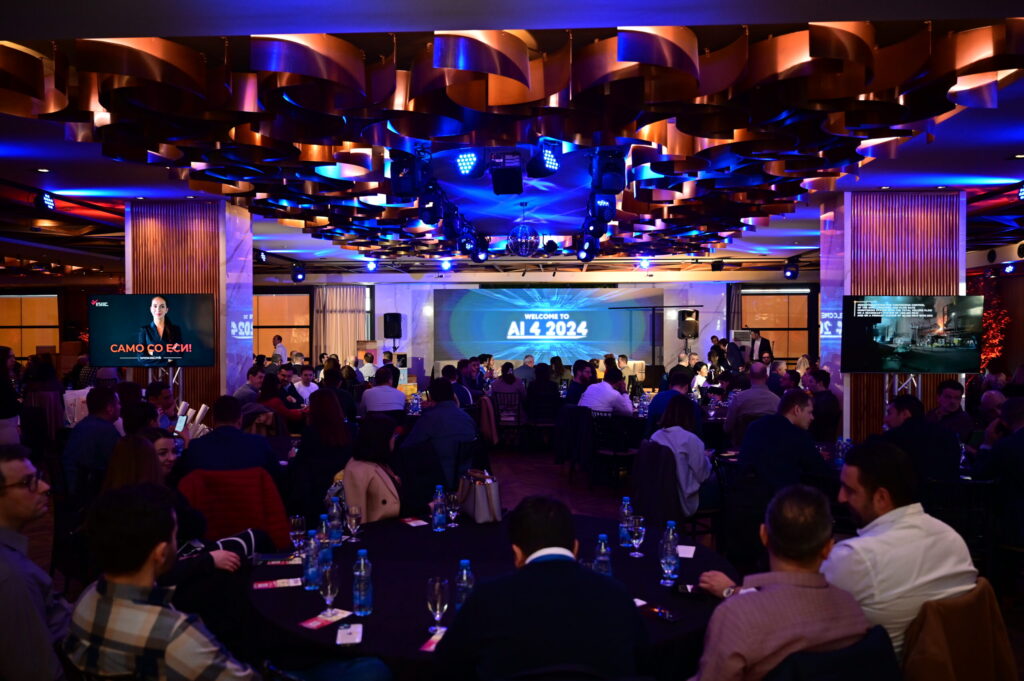
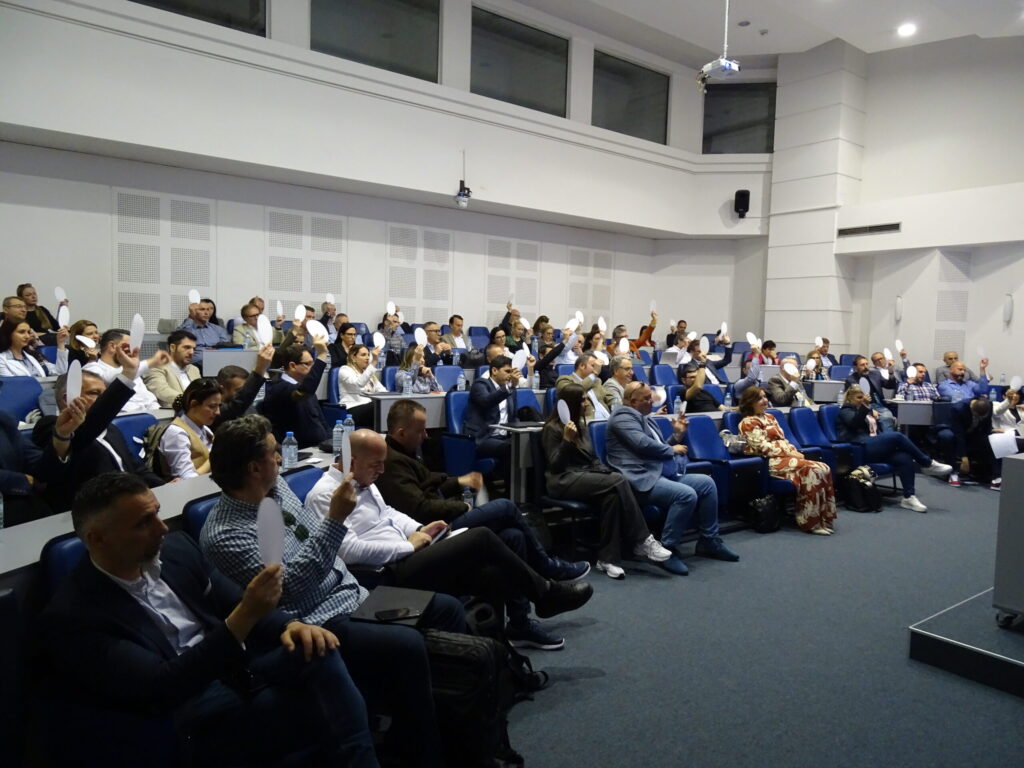
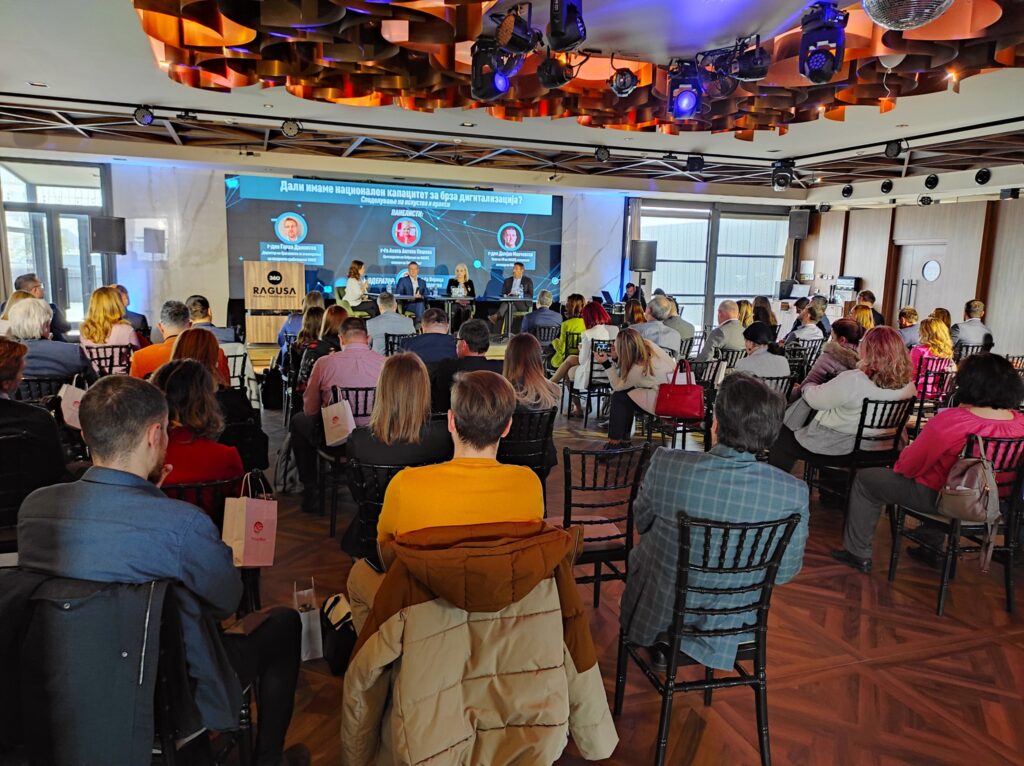
Over two days, we discussed artificial intelligence versus the workforce, as well as its applications in healthcare. On October 29–30, 2024, the Chamber of Commerce for Information and Communication Technologies – MASIT held its 19th traditional annual conference. Two days filled with top speakers, panelists, discussions, a diverse audience, and extensive networking. October 29, 2024 – “Artificial Intelligence vs. the Workforce – From Adaptation to Innovation” The first day of the conference, October 29, was dedicated to the controversial issue of balancing artificial intelligence (AI) with the traditional workforce. Through a series of panel discussions and presentations, attendees had the opportunity to hear experiences and insights from renowned speakers and panelists across various industries. Topics included the application of AI in business, the job roles most affected by automation, and ways in which companies, managers, and employees can adapt and leverage AI as a tool for innovation. The conference was opened by Ms. Aneta Pesheva, President of the MASIT Assembly, Mr. Stefan Andonovski, Minister of Digital Transformation, and Mr. Timothy Ong, Director of the USAID Office for Economic Growth. Vector 8 was one of the official supporters of the first day, enabling us to hear from top professionals as the main honorary speakers. Christoph Tomen and Katherine F. Simon emphasized the collaboration between humans and machines, talent education, and adaptation as key points for the effective application of artificial intelligence. The first panel session of the conference was dedicated to public-private dialogue. We had distinguished speakers who attracted significant attention during the discussion, which was moderated by Ms. Vesna Ivanoska, Director of Qinshift Academy and Vice President of the MASIT Management Board. The panel featured Prof. Dr. Vesna Janevska, Minister of Education and Science; Mr. Radoslav Nastasijević Vardziski, Deputy Minister of Digital Transformation; Mr. Ilija Gospodinov, President of the MASIT Management Board; and Mr. Nebojša Mojsoski, Director of USAID’s Youth Actively Create Opportunities (YACO) initiative. Attendees had the opportunity to hear them discuss ways to enhance mechanisms that create value for society through such partnerships. Prof. Dr. Anis Sefidanis, a renowned innovator and creator of the first humanoid robot in the region, left a strong impression on the audience with his presentation. Additionally, during the panel session “AI: Threat or Opportunity for Jobs?”, moderated by Ms. Dina Ivanović, Site and Recruitment Lead at Proxiad SEE, we discussed the advantages that artificial intelligence brings to the labor market and which job roles are most at risk. Professionals in the field also provided guidance on which skills should be a focus for future students and which tools are currently most used in IT companies. This session featured representatives from this year’s silver sponsors, including: Ms. Verica Jakimovska, Master in Human Resource Management, specialized in new HR strategies, Coordinator of the employment platform www.esi.mk, and initiator and manager of ESI; Ms. Elena Dimovska, Master and Microsoft Certified Trainer and Certnexus Authorized Instructor, working at Semos Education; Mr. Simon Petkov, Master in Computer Science and Chief Systems Architect at Scalefocus. Education was one of the recurring themes throughout the conference day. On the topic of bridging the skills gap – training the workforce of the future, we hosted an expert panel with experienced and distinguished speakers: Mr. Nikola Zhivkov, Head of Development at Qinshift; Dr. Igor Trajkovski, Founder of Time.mk, Professor and Researcher; Dr. Miodrag Cekić, Lead Technical Consultant for CSE/R&D at IWConnect. This session was sponsored by this year’s Gold Sponsor of the conference – Qinshift Academy. The conference also featured a discussion on another very important topic: “AI-Enhanced Management – Redefining Managerial Roles.” This panel session was moderated by Mr. Damjan Manchevski, Director of Strategic Accounts and General Manager for the Balkans at MAK-SYSTEM International Group. The panel included: M.Sc. Sofche Jovanovska, General Manager at ScaleFocus; Mr. Goran Petrevski, Sales Director at ASEE Group; Mr. Filip Petrovski, CEO and Data Architect at Data Masters. We had the opportunity to engage in a productive discussion on the managerial aspects of artificial intelligence, with a particular focus on redefining managerial roles in the context of modern technologies. The panelists discussed how AI can transform traditional management practices, improve decision-making efficiency, and enable innovative approaches to managing teams and resources. The discussion included practical examples, analyzing the advantages and challenges arising from the integration of artificial intelligence into management. Participants actively shared ideas on how technology can influence the future development of management and new strategies in the field. The discussion proved to be particularly dynamic and valuable for all attendees. The panel “AI-Driven Innovations – Shifting Beyond Traditional Business Models”, moderated by Mr. Goran Damovski, Team Leader of the Swiss Program for Enhanced Market Employability, focused on the practical application of expertise and knowledge, as well as the regional perspective and use of artificial intelligence in agribusiness and tourism. This program enabled a comprehensive regional overview. The leading Research and Development Institute for Information Technologies in Biosystems and a pioneer in the digital transformation of agriculture, BioSense Serbia, represented by Ms. Milica Trajkovic, Head of the Business Innovation and Development Department, highlighted the implementation of the Land Parcel Identification System (LPIS) in Serbia. Ms. Trajkovic emphasized that:“By collecting field data and using artificial intelligence with 99% accuracy for LPIS, Serbia now has a reference database for its agricultural parcels. This allows the identification of all arable land contained in the reference parcels and makes it easy to calculate the maximum arable area.” Mr. Milan Banić, Associate Professor at the University of Niš Faculty of Mechanical Engineering, presented AgAR – an Agricultural Autonomous Robot. Equipped with remote control software, pre-defined path movement, and autonomous navigation with obstacle-avoidance sensors, AgAR is an ideal agricultural tool.“The AI-based AgAR robot is a joint project between an ICT company and a technical faculty. It is an excellent model demonstrating how academia and industry can collaborate effectively,” Mr. Banić noted. He emphasized that AgAR aims to increase agricultural production and reduce operational costs, targeting medium and large producers. However, he also highlighted the challenge of convincing farmers to adopt